Around 60% of the global population has already access to the internet (Kemp, 2020 as cited in Mhalla et al., 2020). The internet itself is quite addictive, and it is undeniable that we are spending a lot of our time on social media platforms; the two among the most popular are TikTok and YouTube. Generally, we can divide online mobile applications into two different categories: “life services” and “entertainment and leisure” (Wang, 2017 as cited in Mhalla et al., 2020). TikTok and YouTube fall into the latter category as they provide the space for consumers to enjoy themselves with different social media content and at the same time produce content to entertain others. So, the question is whether we are the consumers or the products for these two platforms.
First, let’s talk about TikTok in a bit in-depth. TikTok is a “live-streaming social networking” site allowing its users to watch short videos, especially for music sharing with short dances and lip-sync performed by the users, comedy, and other kinds of videos showing the talents of the users who share their self-made videos on the site (Schwedel, 2018 as cited in Mhalla et al., 2020). Normally the video on this platform ranges from 15 seconds to 60 seconds, users are mostly young people with around 40% being between 16 to 24 years old while it consumers spend, in average, 52 minutes per day on it (Iqbal, 2020 as cited in Mhalla et al., 2020).

Now let’s talk about YouTube. YouTube is a video-based platform. YouTube was founded in 2005 and acquired by Google in 2006, just one and half years after its establishment (Viertola, 2018). It is a platform where users can watch, upload, comment, and share videos on the platforms. As it is considered a social media site, it uses its users as content producers, normally called YouTubers.
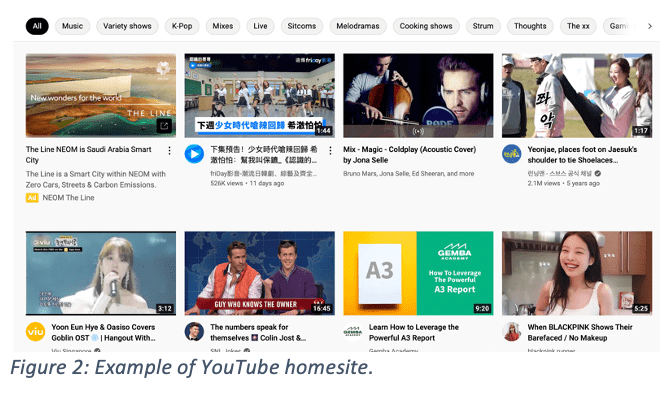
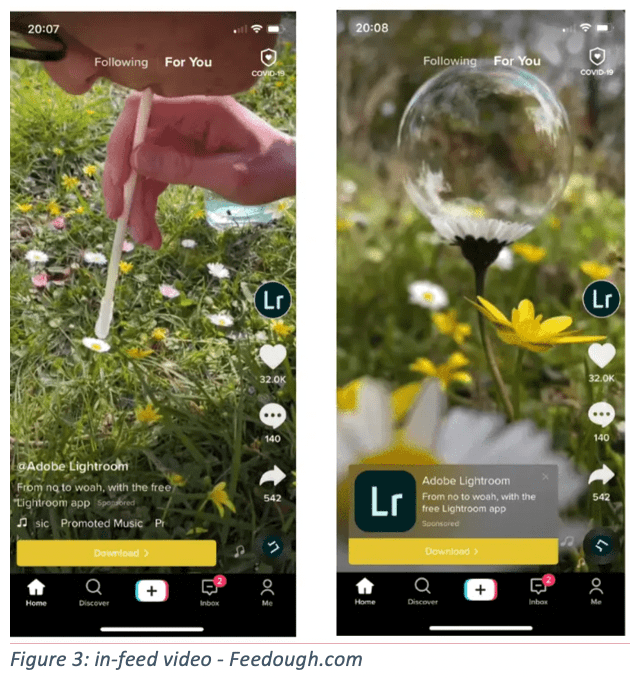
What are the differences between TikTok and YouTube? Before we go to the differences between the two, we should agree on the similarities of both platforms first. Well, both are social media with video-based content. Their popularity depends on the users and content producers. Contents producers on the sites can earn their income with their effort in producing interesting content. They can earn through viewership and their cooperation with the corporate company/brands. The differences between the two platforms are the business model. First TikTok targeting only the short video content while YouTube does focus more on videos with a longer duration. Besides the way to earn money from the sites mentioned above, TikTok users also can get the income from the donation from the users directly. According to feedough.com, TikTok also takes 50% of commissions on the in-app purchase. Besides these, TikTok also earns from advertisements such as In-Feed Video which appears on the videos users are watching, brand-take-over ad which show on the front page, etc.. Differently, according to YouTube itself, YouTube only earns its income mainly from the advertisement along with its subscription model. Nevertheless, we should also never forget that YouTube is a part of Google; thus, its advertisement power should never be ignored. Even with this, TikTok also has a strong partner, Taobao which enable both to link for e-commerce traffic.
With all of these, we can conclude that both platforms have their own business models, and it is hard to say which of these are stronger or more sustainable. Even with this said, we still can see that TikTok is more incline to social media while YouTube sounds more a concrete platform for video hup.


 Digital Communications Corner
Leave a comment