When we talk about e-commerce, we rarely miss the giants in this technology based industry such as Amazon, eBay, Aliababa, QVC, etc.. So today, let’s discuss about Amazon and QVC to see their positions and differences in digital marketing perspective.
To bring up some information, Amazon was found in 1995 as an online bookstore, then went public in 1997 (NASDAQ as cited in Filson, 2004). After launching its music store service in 1998 along with its innovative approaches such as “1-click ordering”, Amazon has become a well-known and successful online retailer (Filson, 2004). Well, it is still one of the gigantic e-commerce in the world now with operations in different countries.
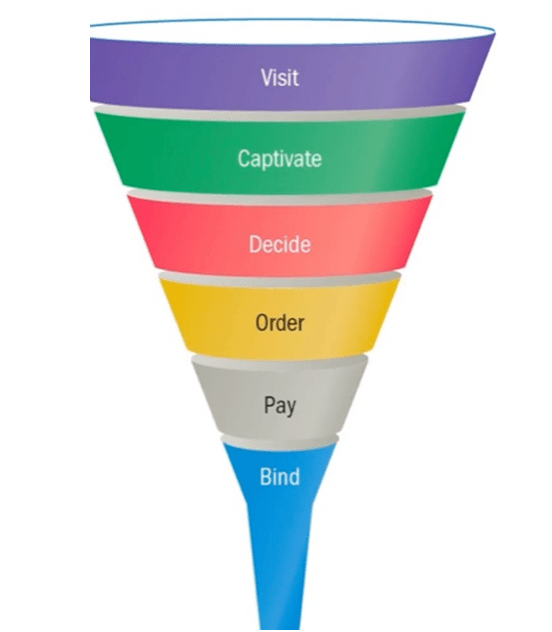
In this article, I would like to use the Digital Marketing Funnel as a guide to compare both amazing online shopping platforms. To make it easier to understand, this funnel consists of:
- Visit: to attract the audiences to the website
- Captivate: to make the audiences attracted to the contents shown on the website
- Decide: to make comparison among the products they found and make decision to buy
- Order: to make final decision to purchase
- Pay: to complete the purchase with payment
- Bind: to make the clients return to the platform after the first purchase
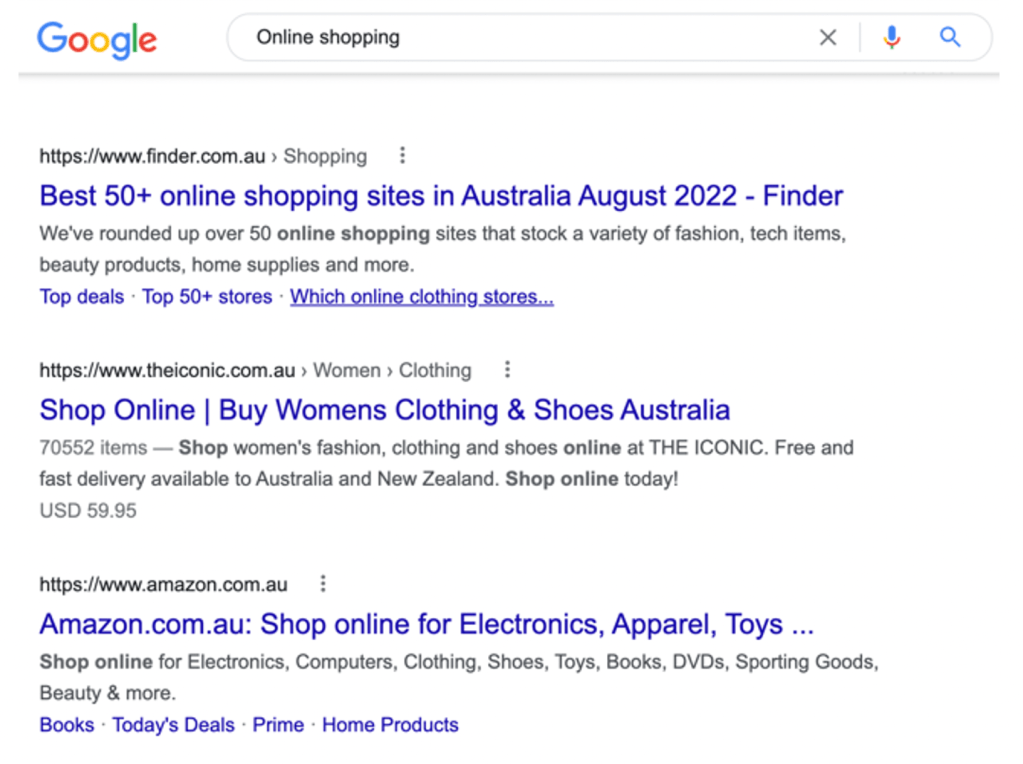
The first “visit” is very important as it is linked to the Zero-moment of truth in which clients/buyers want to search for products online. If we use a search engine with the term “Online Shopping”, Amazon comes to third place result (*though, it might be different from one personal search engine to others). In my search result, QVC is not found on the first page at all. With this, we can make assumption that Amazon stands higher for “Visit” stage comparing to QVC.
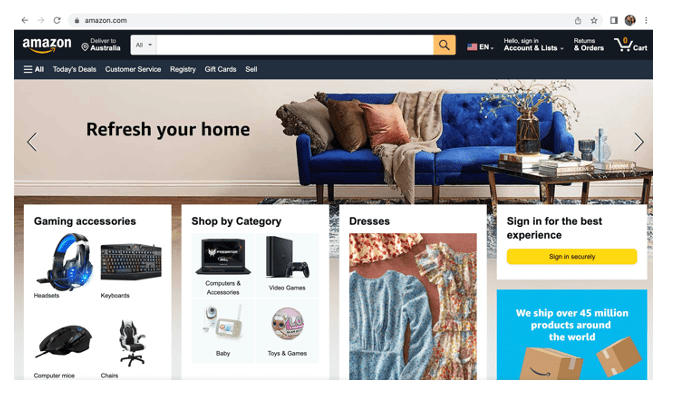
The next step is the “Captivate”. To compare the two (and in case the clients found and reach to both sites), we should look back at their homepage. First Amazon. At first glance, we can see the generalization of attraction for the site. It is diverse approaches which do not distinguish gender, the priority of special needs, or age. All categories of products are displayed in a section, well it is also related to the popularity of products too, but there is no big distinction in targeting.
How about QVC? At first glance, QVC is more feminine or at least targeting people who seek beauty products as we can see from the photo on its homepage. The whole homepage is dedicated to cosmetics, fashion, and other kinds of female products. Only a very small section is for male clients at the bottom of the page.

To be honest, both sites are easy to navigate. They have different sections and simple web design. Even though QVC is a bit more attractive to its nature of cosmetic and fashion-based, Amazon sticks to simplicity, so both is quite balanced for comparison.
So the question now is who is performing better at captivating the visitors overall? By any means, QVC is standing higher and performing better at captivating female visitors who mostly want to purchase the products of these specialized categories while Amazon would be able to make visitors stay on the site to find their everyday needs as they can find everything there.
Now, we can move on to the third stage, “Decide”. A bit of surprise for me, QVC seems to do better. QVC shows a lot of promotional products while Amazon only a small portion of the display to show the “Deal of the Day”. Faryabi et al (2012) Found that the price discount has an impact on the buyers in making a purchase decision on online shopping. This also play a role when visitors making a comparision between the products they are interested in.

Not only this, QVC also provides a space to inform and entertain visitors with their shows. As seen in the photo here, they have different shows on different topics, so QVC is doing better than Amazon. It might be due to their differences in nature though as we pointed out above.

Now, the order part is a very decisive part of the comparison in this article as at the end of the day, if everything is smooth, but the visitors cannot make a purchase or complete the transaction, it will turn out to be useless.
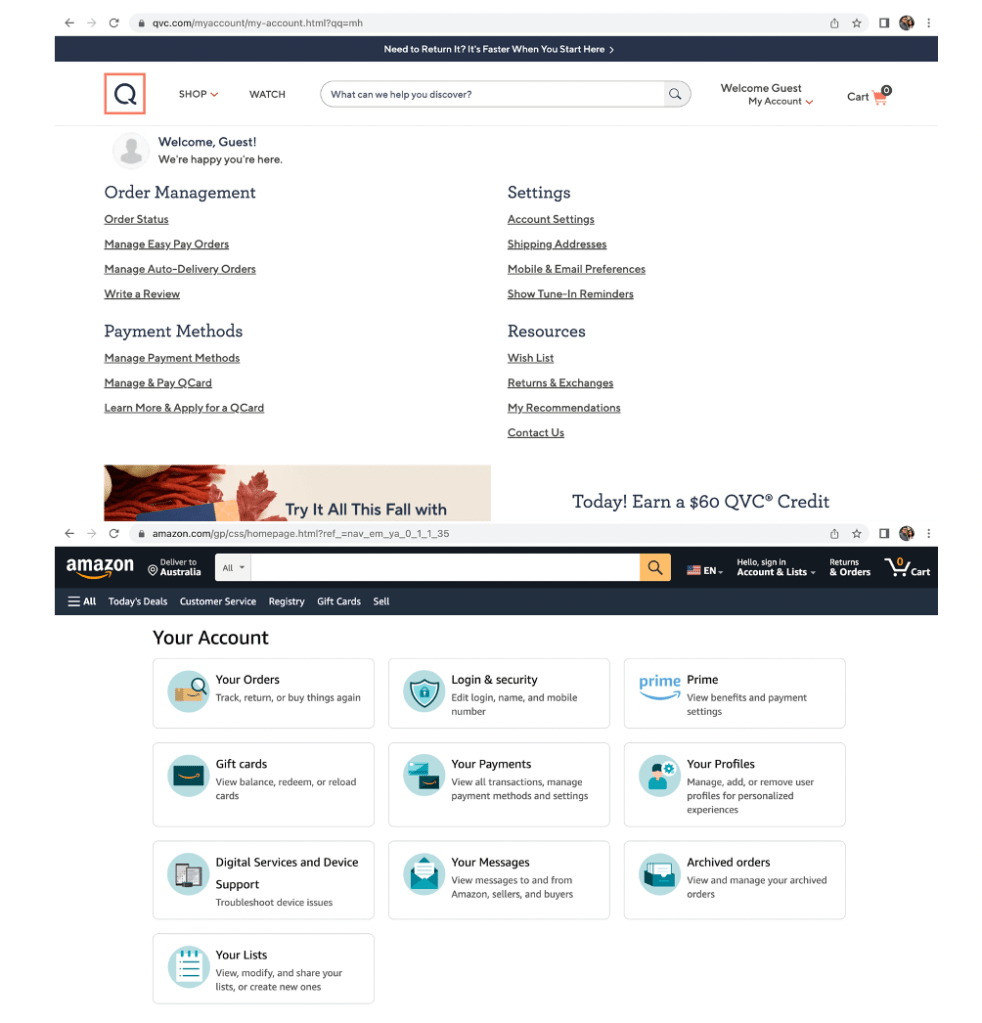
Both sites require visitors to register their accounts. Interestingly, Amazon has the option to change the currency used on the site, so visitors can understand the actual cost of the products they want to purchase.
Both sites have similarities in Account setting and the functions available there are quite easy to understand. Yet, Amazon still has Amazon Prime which is quite convenient for visitors who don’t mind paying the membership price to get their shipping done quicker. Both sites are performing quite well, so it is quite hard to judge which one is better, but Amazon might be a bit more convenient with its Amazon Prime service.
For the last stage to make the Digital Marketing successful according to the funnel, both sites need to be able to retain the customers after their experiences with them. As both of them allows other vendors to sell their products on the sites, it is quite hard to judge if the visitors/clients will return to the sites again after the first purchase. Thought with the Star Rating and Comment system available on both sites, it is convinced that both sites can at least retain the majority of the clients as before the purchase, most of the visitors would review the rate and reviews from the previous buyers. Product reviews really play a big role in influencing the purchase intention (Yang et al, 2016).
So the conclusion is that both Amazon and QVC are doing great in their e-commerce business model. Both can be separated into different market segments as the first is focusing more on a diversified market with everything available to purchase while the latter is more on the fashion and beauty products with the female target. Regarding their scores on Digital Marketing Funnel, both are doing quite well and almost in similar grades, so it is quite hard to distinguish the winner and loser.
What do you think? Please feel free to comment and share your thought below. I really hope you enjoy reading this article. See you in next article.
References:
Filson, D. (2004). The impact of e‐commerce strategies on firm value: lessons from amazon.com and its early competitors. The Journal of Business , 77(S2), S135-S154. https://www.jstor.org/stable/10.1086/381640
Faryabi, M., Sadeghzadeh, K., & Saed, M. (2012). The effect of price discounts and store image on consumer’s purchase intention in online shopping context case study: Nokia and HTC. Journal of Business Studies Quarterly, 4(1), 197-205.
Jing Yang J., Sarathy, R., & Lee J.K. (2016). The effect of product review balance and volume on online Shoppers’ risk perception and purchase intention. Elsevier, 86, 66-76. https://doi.org/10.1016/j.dss.2016.06.009

 Digital Communications Corner
Leave a reply to What if you are a Digital Marketer for an online supermarket? – Digital Communications Corner Cancel reply